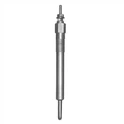
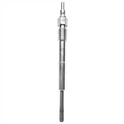
In the world of internal combustion engines, glow plugs play a crucial role, especially in diesel engines. As a dedicated supplier of 129mm glow plugs, I've witnessed firsthand the diverse needs of different engine configurations. This blog aims to explore whether there are differences in 129mm glow plugs for various engine setups.
The Basics of Glow Plugs
Before delving into the differences, let's understand the fundamental function of glow plugs. In a diesel engine, unlike a gasoline engine that uses a spark plug to ignite the air - fuel mixture, diesel engines rely on compression ignition. However, in cold conditions, the air - fuel mixture may not reach the required temperature for ignition. This is where glow plugs come in. They heat up the combustion chamber, providing the necessary heat to facilitate the ignition process.
A 129mm glow plug, as the name suggests, has a length of 129 millimeters. This length can be significant as it determines how far the glow plug extends into the combustion chamber, affecting the heat distribution and ignition efficiency.
Factors Affecting Glow Plug Requirements in Different Engine Configurations
Engine Size and Displacement
Larger engines typically have larger combustion chambers. A 129mm glow plug may need to generate more heat in a big - displacement engine compared to a smaller one. In a large - displacement engine, the volume of the air - fuel mixture is greater, and thus more energy is required to heat it up to the ignition temperature. For example, a heavy - duty truck engine with a large displacement will demand a 129mm glow plug that can reach higher temperatures and maintain the heat for a longer period. On the other hand, a small - displacement diesel engine in a compact car may not need as much heat output from the glow plug.
Compression Ratio
The compression ratio of an engine is another critical factor. Engines with a high compression ratio compress the air - fuel mixture more tightly. This results in a higher temperature during the compression stroke, reducing the reliance on the glow plug for ignition. In such engines, a 129mm glow plug may not need to reach extremely high temperatures. Conversely, engines with a lower compression ratio will require the glow plug to contribute more significantly to the ignition process.


Engine Speed and Load
Engines that operate at high speeds or under heavy loads generate more heat internally. This means that the 129mm glow plug may not need to work as hard as in an engine that operates at low speeds or light loads. For instance, a racing diesel engine that runs at high RPMs will have a relatively warm combustion chamber even in cold conditions due to the high - speed operation. In contrast, an engine in a stationary generator that operates at a constant low - speed may need a more efficient glow plug to ensure reliable ignition.
Differences in Design and Performance
Heating Element Material
The material of the heating element in a 129mm glow plug can vary depending on the engine requirements. Some engines may benefit from a heating element made of a material with high thermal conductivity, such as platinum - iridium alloys. These materials can heat up quickly and reach high temperatures, which is ideal for engines that need rapid ignition. Other engines may use a nickel - chromium alloy heating element, which is more cost - effective and can provide a stable heat output over a long period.
Insulation and Heat Dissipation
Proper insulation is essential to ensure that the heat generated by the 129mm glow plug is concentrated in the combustion chamber. Different engine configurations may require different levels of insulation. For example, engines with a high - temperature operating environment may need better - insulated glow plugs to prevent heat loss to the surrounding engine components. Additionally, the heat dissipation characteristics of the glow plug can also vary. Some engines may need a glow plug that dissipates heat quickly after ignition to prevent overheating, while others may require a slower heat dissipation rate to maintain a stable combustion process.
Examples of Different Engine Configurations and Glow Plug Needs
Ford Engines
Ford has a wide range of diesel engines with different configurations. For example, the Ford Pa - 305 E7tz12a342a engine may require a specific type of 129mm glow plug. You can find the Glow Plug for Ford Pa - 305 E7tz12a342a 5614220 81mm 11v which is designed to meet the ignition requirements of this particular engine. The engine's size, compression ratio, and operating conditions will determine the exact specifications of the glow plug.
Another Ford engine, the Ezd33 N10140103, has its own unique needs. The Glow Plug for Ford Ezd33 N10140103 91.5mm 11v is tailored to this engine's configuration. The glow plug's length, voltage, and heating characteristics are optimized for the Ezd33 engine's combustion process.
The Ford Ge122 266038 1717631 engine also has specific glow plug requirements. The Glow Plug for Ford Ge122 266038 1717631 148.5mm is designed to work efficiently with this engine, taking into account factors such as engine displacement, compression ratio, and operating speed.
Impact on Engine Performance and Reliability
Using the right 129mm glow plug for a specific engine configuration is crucial for optimal engine performance and reliability. If the glow plug does not meet the engine's requirements, it can lead to several issues. For example, a glow plug that does not generate enough heat may cause hard starting, especially in cold weather. This can put additional stress on the starter motor and the battery.
On the other hand, a glow plug that generates too much heat or has poor heat distribution can cause pre - ignition or uneven combustion. This can result in engine knocking, reduced power output, and increased fuel consumption. Over time, these issues can also lead to premature wear and tear of engine components.
Conclusion and Call to Action
In conclusion, there are indeed significant differences in 129mm glow plugs for different engine configurations. Factors such as engine size, compression ratio, speed, and load all play a role in determining the specific requirements of a glow plug. As a supplier of 129mm glow plugs, we understand the importance of providing the right product for each engine setup.
If you are in the market for high - quality 129mm glow plugs tailored to your engine's needs, we invite you to reach out for a procurement discussion. Our team of experts can help you select the most suitable glow plug for your engine configuration, ensuring reliable ignition and optimal engine performance.
References
- Heywood, J. B. (1988). Internal Combustion Engine Fundamentals. McGraw - Hill.
- Taylor, C. F. (1985). The Internal Combustion Engine in Theory and Practice. MIT Press.