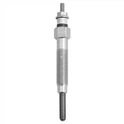
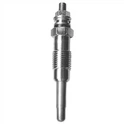
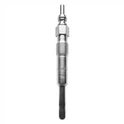
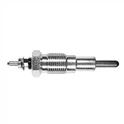
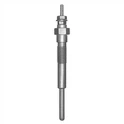
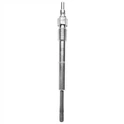
Hey there! As a supplier of 129mm GLOW PLUGs, I've had my fair share of experiences and insights into how the coil design of these little but mighty components can significantly impact their heat generation. So, let's dive right in and explore this topic.
First off, what exactly is a glow plug? Well, it's a crucial part in diesel engines. When you start a diesel engine, especially in cold weather, the air-fuel mixture needs to be heated to a high enough temperature to ignite properly. That's where the glow plug comes in. It acts like a little heater, pre - heating the combustion chamber so the engine can start smoothly. And for our 129mm glow plugs, the coil design within them is like the heart of the operation.
Let's talk about the basics of coil design. The coil in a glow plug is typically made of a special alloy. This alloy is chosen for its ability to resist high temperatures and conduct electricity efficiently. The material's properties play a huge role in heat generation. For example, if the alloy has a high electrical resistance, according to Ohm's Law (V = IR, where V is voltage, I is current, and R is resistance), when an electrical current passes through the coil, more heat will be generated. Think of it like a toaster. The wires in a toaster have a relatively high resistance, and when you turn it on, the electricity flowing through those wires creates heat, which toasts your bread.
Now, the shape of the coil matters a lot too. There are different coil designs, like a simple helical coil or a more complex multi - layered coil. A helical coil is like a spring. It's wound in a spiral shape. This design has its advantages. The helical shape allows for a longer length of wire to be packed into a small space. A longer wire means more resistance, and as we know from Ohm's Law, more resistance leads to more heat generation. It also provides a large surface area for heat transfer. The heat generated in the coil can then be transferred to the tip of the glow plug, which is in contact with the air - fuel mixture in the combustion chamber.
On the other hand, a multi - layered coil design can offer even better heat generation. In a multi - layered coil, multiple coils are stacked on top of each other. This not only increases the overall resistance but also enhances the heat - generating capacity. The layers can be arranged in a way that maximizes the electrical path and heat transfer efficiency. For instance, the inner layers can be designed to generate the initial heat, and the outer layers can help in distributing and amplifying that heat.
The number of turns in the coil is another critical factor. More turns in the coil mean a longer wire length and thus higher resistance. If you have a coil with a large number of turns, it will generate more heat compared to a coil with fewer turns, assuming the same voltage is applied. However, there's a balance to be struck. If there are too many turns, the coil might become too bulky, and it could also take longer to heat up because the increased resistance might limit the current flow initially.
The spacing between the turns of the coil also affects heat generation. If the turns are too close together, there might be a risk of short - circuiting. On the other hand, if the spacing is too large, the heat transfer might not be as efficient. The ideal spacing allows for proper electrical insulation between the turns while still enabling effective heat transfer.
Let's take a look at some of the products we offer. We have the Glow Plug for Ford Pa - 304 E5tz12a342a Dg - 175 77mm 10.5v. This glow plug has a well - designed coil that's optimized for its specific application in Ford engines. The coil design ensures quick and efficient heat generation, which helps in starting the engine smoothly, even in cold conditions.
Another great product is the Glow Plug for Ford Pa - 305 E7tz12a342a 5614220 81mm 11v. The coil in this glow plug is engineered to provide a consistent and reliable heat source. It's designed to withstand the high - temperature and high - pressure environment inside the engine's combustion chamber.
We also have the Glow Plug for Ford B - 081 71mm 11v. The coil design in this glow plug is a result of years of research and development. It offers excellent heat - generating capabilities, which is essential for the proper functioning of the Ford engines it's designed for.
In addition to the design factors we've discussed, the manufacturing process of the coil also has an impact on heat generation. The way the coil is wound, the quality of the welding (if any), and the overall assembly of the glow plug all contribute to its performance. For example, a poorly wound coil might have uneven resistance, which can lead to inconsistent heat generation.
When it comes to choosing the right glow plug for your engine, it's important to consider the coil design. Different engines have different requirements in terms of heat generation. A larger engine might need a glow plug with a more powerful coil design to ensure proper ignition. On the other hand, a smaller engine might not require as much heat, and a simpler coil design could be sufficient.
As a supplier, we're constantly working on improving our coil designs. We use the latest technologies and materials to make our 129mm glow plugs more efficient and reliable. We conduct extensive testing to ensure that each glow plug meets the highest standards of heat generation and durability.
If you're in the market for high - quality glow plugs, whether it's for Ford engines or other applications, we'd love to have a chat with you. Our team of experts can help you choose the right glow plug based on your specific needs. We understand the importance of a well - designed coil in heat generation, and we're confident that our products can meet your expectations. So, don't hesitate to reach out and start a conversation about your glow plug requirements.
References


- Principles of Diesel Engine Operation textbooks
- Research papers on glow plug technology
- Industry standards and guidelines for glow plug manufacturing